

Selling shares to raise cash sounds simple until you factor in what it actually costs. Liquidating appreciated positions can trigger a capital gains tax bill, interrupt years of compounding, and force a sale at a price the market didn't choose for the investor.
This is the exact problem wealth portfolio lending solves. Instead of selling, an investor borrows against the portfolio's value and lets the underlying holdings keep working. This article breaks down how portfolio lending works, why advisors increasingly recommend it, and where the risks show up if it's used carelessly.
Key Takeaways
- Portfolio lending lets investors borrow against securities instead of selling them.
- Staying invested protects against the risk of missing the market's best days.
- Borrowing instead of selling can defer capital gains and preserve after-tax capital.
- Funds are accessible within days, not weeks.
- Loans carry real risks, including margin calls, so disciplined use matters.
What Is Wealth Portfolio Lending
Wealth portfolio lending, often structured as a securities-based line of credit (SBLOC), lets an investor borrow against the value of their investment portfolio rather than their income or a new asset purchase. The securities themselves stay invested and pledged as collateral.
These facilities are typically non-purpose loans, meaning investors can't use the proceeds to buy more securities. They serve real-world liquidity needs instead. According to Charles Schwab, common uses include:
- Bridging a real estate purchase before a property sells
- Covering an unexpected tax bill
- Funding short-term business expenses or equipment purchases
- Smoothing income during a slow quarter
- Handling emergencies without disrupting a long-term strategy
This liquidity works alongside a broader wealth strategy, not as a replacement for it. A wealth advisor still needs to weigh how the borrowing fits into estate planning, cash flow projections, and risk tolerance before funds ever get drawn.
Key Advantages of Wealth Portfolio Lending
The advantages here aren't abstract. They show up in numbers investors already track: portfolio growth, tax liability, how fast cash becomes available, and how diversified the overall strategy is.
Staying Invested Through Market Cycles
Selling assets to raise cash means those assets stop working for you, even temporarily. Borrowing against a portfolio keeps the collateral fully invested and exposed to market upside while the loan sits alongside it.
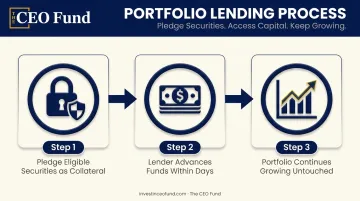
Here's how it plays out in practice:
- The investor pledges eligible securities as collateral.
- The lender advances funds, often within days.
- The portfolio continues to be managed and grow, untouched.
The stakes of getting this wrong are higher than most investors assume. Fidelity found that a hypothetical $10,000 investment in the S&P 500 from 1988 through 2025 had its long-term gains reduced by 38% if the investor missed just the market's five best days. [17]
Schwab's research shows a similar pattern: missing the index's 10 best days between 2005 and 2024 would have cut annualized returns by nearly 40%. [18]
Those "best days" rarely announce themselves in advance. They tend to cluster right after sharp downturns, exactly when a forced seller is most likely to be cashing out. Portfolio lending sidesteps that risk entirely by keeping the investor in the market during the periods that matter most.
KPIs affected: long-term portfolio value, compounding returns, opportunity cost. This matters most during volatility or when an investor needs cash fast but still believes in the portfolio's long-term trajectory.
Tax Efficiency and Deferred Capital Gains
Selling an appreciated asset creates a capital gain the moment the sale closes. The IRS treats any sale above the adjusted basis as taxable, with long-term rates applying to holdings owned more than a year. [21]
Borrowing against the same asset avoids that taxable event altogether. The portfolio stays intact, and no gain is realized just to access cash.
There's a second layer worth understanding: loan interest may be deductible, but only under specific conditions. Per IRS Publication 550, deductibility follows how the loan proceeds are used, not simply the fact that a portfolio secures the loan. [22]
Interest tied to personal spending doesn't automatically qualify. Investors typically need to file Form 4952, and the deduction is capped at net investment income. [27]
- Avoids an immediate tax bill from selling appreciated securities
- Keeps capital compounding instead of shrinking from a tax payment
- May allow a partial interest deduction, depending on how funds are used
This strategy defers the tax rather than eliminating it — a future sale, whether voluntary or lender-forced, can still trigger the original gain. [32] This advantage matters most for investors holding concentrated or highly appreciated positions who want to avoid triggering a large, unplanned tax event.
Fast, Flexible Liquidity for Diversification and Opportunity
Because the collateral value is easy to verify, portfolio-backed loans typically move faster than conventional financing. Fidelity notes that approved borrowers usually get access to funds within a few business days, and Schwab's Pledged Asset Line can be approved in as little as one. [1][2]
Securities-based lending is a mainstream financing tool, not a niche product. The Federal Reserve estimated U.S. securities-based loans totaled $138 billion in the first quarter of 2024, roughly 2.7% of outstanding consumer credit. [12] That's a substantial share of household liquidity flowing through portfolios rather than banks.
Speed matters, but where the proceeds go matters just as much. A growing number of investors use this liquidity to diversify rather than simply cover an expense. Instead of selling core holdings to add uncorrelated income sources, they pair a securities-based credit line with an allocation to a passive, real estate-backed strategy.
This is where mortgage note investing fits. Firms like The CEO Fund acquire performing and non-performing mortgage notes secured by real estate collateral across the U.S., passing through monthly cash flow to investors without requiring them to own or manage property. Target returns in this category typically run 8-12% annually, generated from borrower interest and principal payments rather than public market movement.
For an investor who just accessed liquidity through a portfolio loan, that structure offers something a stock allocation can't: income that isn't tied to the S&P 500's next move.
KPIs affected: liquidity speed, diversification ratio, passive income generation. The payoff is clearest when a time-sensitive opportunity appears, or when a client wants income sources that don't rise and fall with the broader market.
What Happens When Portfolio Lending Is Misused or Ignored
Ignoring this tool entirely has a cost. Investors without access to portfolio lending often end up selling assets at exactly the wrong time, locking in losses or missing the recovery that follows a downturn.
But misuse cuts the other way just as hard. Over-borrowing against volatile collateral is where things go wrong fast.
Here's the mechanism: if collateral value drops below the lender's required threshold, FINRA notes the borrower typically has only two or three days to add funds or repay part of the loan. [8] Miss that window, and the lender can sell pledged securities without advance notice, and the borrower doesn't get to choose which ones. [8]
A few compounding risks worth flagging:
- Concentration risk: a portfolio weighted heavily in one stock or sector can trigger a call after a single bad earnings report [8]
- Rate risk: these are demand loans with rates that can shift daily alongside benchmarks like SOFR [8]
- No exit plan: borrowing costs can quietly outpace investment returns, eroding the wealth the loan was meant to protect
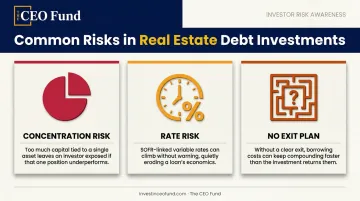
These risks share one root cause: no plan. Avoiding them means diversifying pledged collateral, tracking rate exposure against benchmarks like SOFR, and setting a repayment timeline before borrowing a single dollar.
How to Get the Most Value from Wealth Portfolio Lending
Getting real value from this tool requires discipline and careful planning. A few practices separate investors who use portfolio lending well from those who get burned by it:
- Borrow below the maximum. FINRA specifically recommends taking less than the amount offered, keeping a buffer against normal market swings. [8]
- Coordinate with a professional. Loop in a wealth advisor or tax professional before drawing funds, so the borrowing aligns with estate planning and broader financial goals.
- Define an exit before you draw. Know how and when the loan gets repaid, whether that's a property sale, a bonus, or a scheduled liquidity event.
- Review terms periodically. Collateral values shift and so do rates. Treat this as an active facility, not something you set up once and forget.
- Reduce concentration where possible. Less-volatile collateral helps avoid maintenance calls tied to single-stock swings. [8][32]
Conclusion
The core value of wealth portfolio lending is straightforward: it lets investors access cash without abandoning the strategy they've spent years building. That means staying invested through volatility, deferring taxable events, and moving fast when opportunity knocks.
None of that works without discipline, though. Borrowing conservatively and having a clear repayment plan turn this from a risk into a genuine advantage.
Increasingly, investors are pairing that liquidity with income-generating alternatives that don't correlate with public markets. Mortgage note investing is one example, delivering monthly cash flow backed by real estate collateral while the core portfolio stays untouched.
Firms like The CEO Fund make that pairing accessible, sourcing notes secured by real estate across 50+ states. Combined with portfolio lending, this creates a diversified strategy built for generational wealth, not just the next liquidity event.
Frequently Asked Questions
What is wealth portfolio lending?
It's borrowing against the value of an investment portfolio, such as stocks, bonds, or funds, using those holdings as collateral. It gives investors access to cash without selling the underlying assets.
Are portfolio loans a good idea?
They work well for investors with strong risk tolerance and a clear repayment plan. Without one, the risk of a margin call if collateral value drops makes them far less attractive.
What is the average interest rate on a portfolio loan?
Rates vary by lender but are typically variable, tied to benchmarks like SOFR plus a spread. They're often lower than unsecured credit, but you should confirm current pricing directly with your lender.
How much can I borrow against my investment portfolio?
Regulatory guidance shows agreements can permit borrowing anywhere from 50% to 95% of account value, depending heavily on asset type and volatility. Treasuries typically support higher advance rates than individual equities.
What happens if my portfolio value drops after taking a loan?
A decline in collateral value can trigger a maintenance call. You'll typically have just a few days to add funds or repay part of the balance before the lender can sell pledged assets.
Can portfolio loans be used to invest in alternative assets like mortgage notes?
Yes. Many investors use portfolio-loan proceeds to diversify into income-generating alternatives, such as real estate-backed mortgage note funds, while keeping their core portfolio fully intact.